What is
The Bladderwrack?
Waste That Flows Both Ways is a public waterfront installation system.
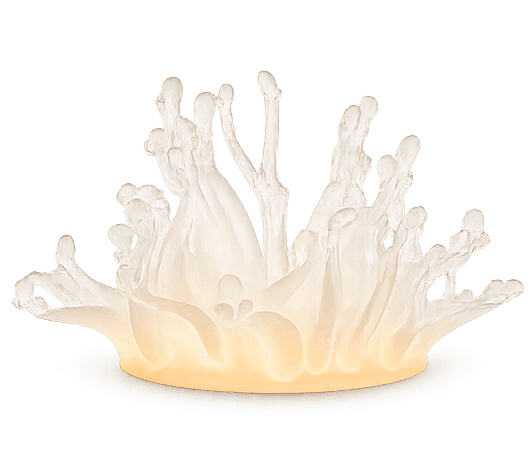
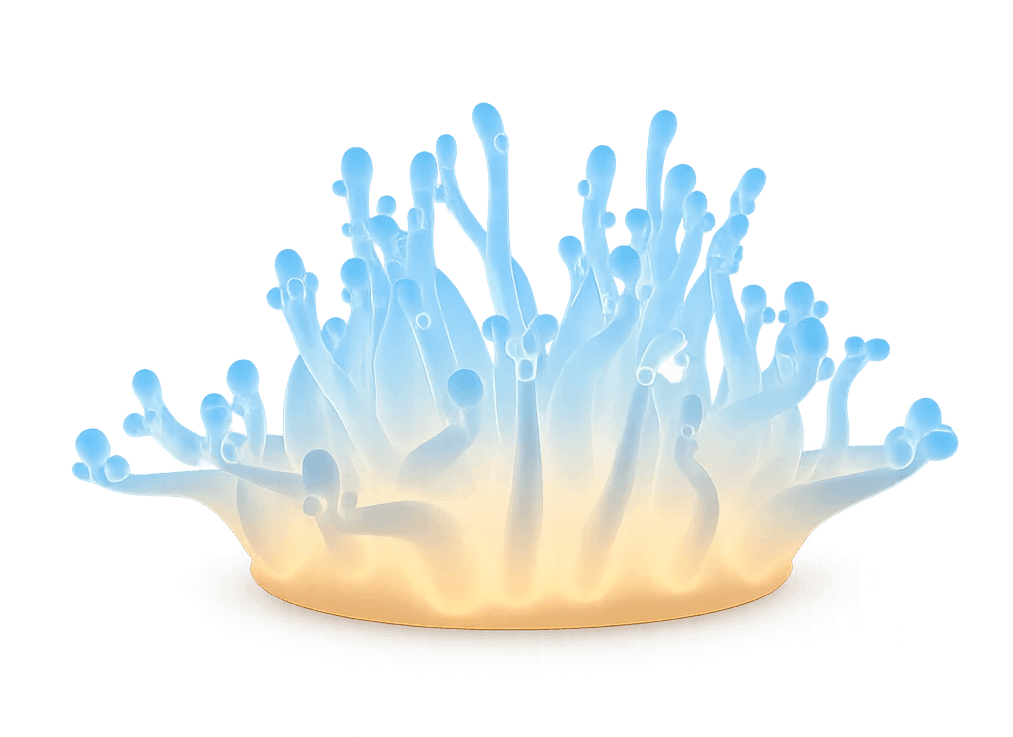
Its water-facing component, The Bladderwrack, is made of branching shoreline structures and clustered bladder-like illuminated nodes. These nodes glow in response to environmental signals, making invisible changes in water conditions more noticeable to visitors.
Located near the rocky edge of the water, The Bladderwrack acts as the first point of attention in the larger site system. It draws visitors toward The Gallery and seating area, where the glowing signal can be interpreted through research, diagrams, and public discussion.

Design & System





The human-facing
layer.
The Gallery is the human-facing layer of the project.
Visitors move through the structure to encounter diagrams, fieldwork, and explanations of CSO systems and water contamination.
It connects the visual signal in the water to broader environmental knowledge.
What it holds
The Gallery includes diagrams, maps, fieldwork documentation, E. coli testing materials, temperature explanations, and QR codes linking to extended digital content.
What it does
It transforms the installation from an object into an interpretive system.
Seating blocks
The seating blocks create a slower public space around The Gallery and The Bladderwrack, supporting observation, discussion, and reflection.

Bladderwrack as form logic
The Bladderwrack is inspired by bladderwrack, a shoreline algae that attaches to rocks and forms clustered bladder-like structures.
We focus on its position at the threshold between land and water, and on how its repeated rounded forms can be translated into modular illuminated units.
Bladderwrack connects the design to the shoreline rather than treating the waterfront as a neutral background. Its bladder-like forms inform the glowing nodes, while its rock-attached growth pattern shapes how The Bladderwrack sits near the water’s edge.
From bladder
to node
In The Bladderwrack, biological forms are translated into spatial elements.
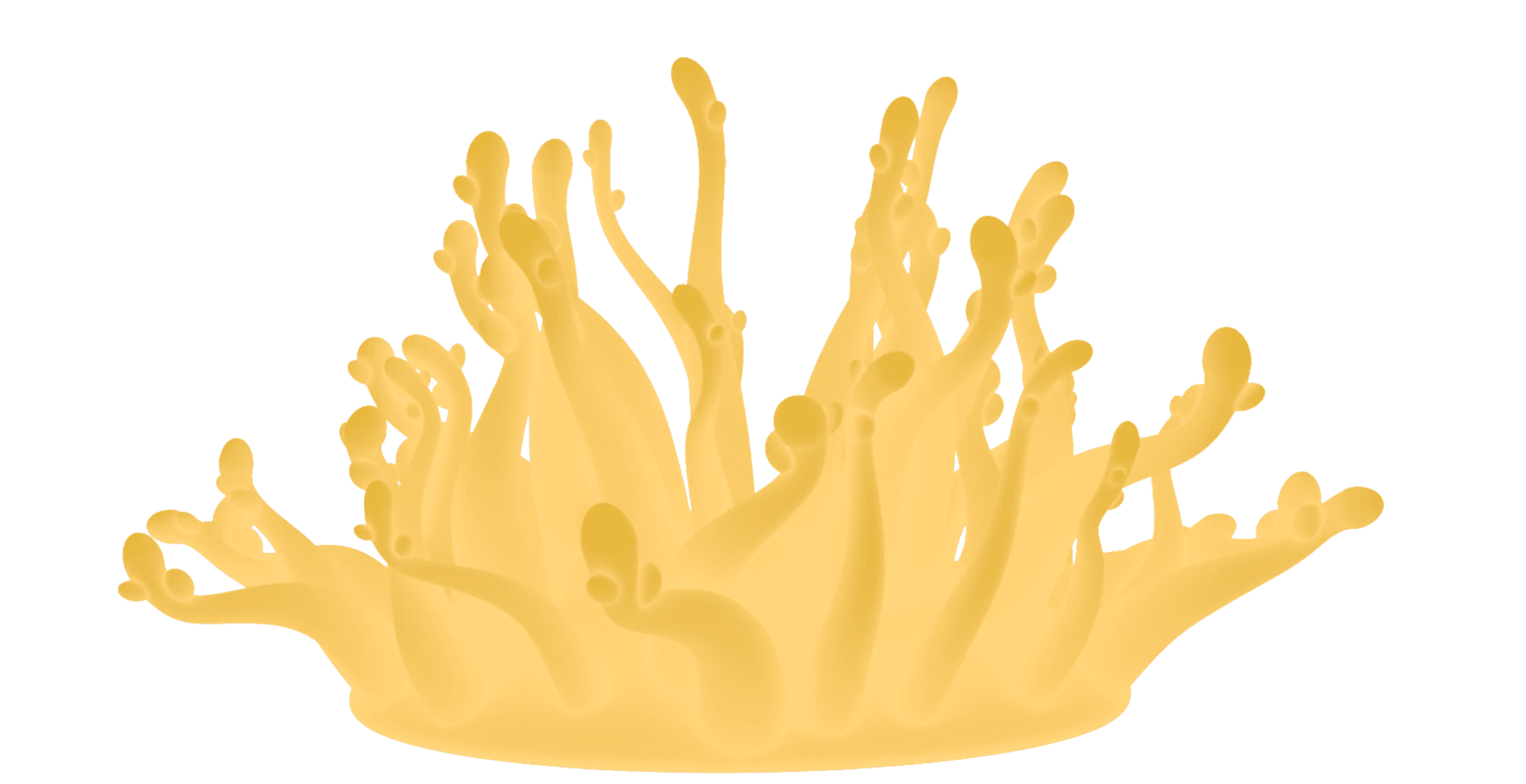
Bladder-like shapes become illuminated nodes, connected through branching structures that extend along the shoreline.
The form is biological without being literal. It uses repetition, clustering, and soft extension to create a visual language that belongs to the waterfront.
At the same time, the structure supports the technical system. It provides pathways for LED strips and distributes light across the water-facing surface.
The form is therefore both expressive and functional: it carries the biological logic of the project while enabling light-based signaling.




Light is not
a safety label.
Light gives The Bladderwrack its public function.
Instead of presenting environmental data through reports, the installation translates changing conditions into visible color and glow.
The goal is not to provide certainty, but to invite attention and interpretation.
The glowing nodes act as a public signal. They draw visitors toward the water and prompt questions: what is changing, why is the light responding, and what remains unseen below the surface.
The light does not indicate certainty. It reflects a validated environmental signal derived from multiple conditions.
Light does not function as a safety label. It operates as a visual interface between environmental sensing, public space, and human awareness.
Light is not
a safety label.
Light gives The Bladderwrack its public function.
Instead of presenting environmental data through reports, the installation translates changing conditions into visible color and glow.
The goal is not to provide certainty, but to invite attention and interpretation.
The glowing nodes act as a public signal. They draw visitors toward the water and prompt questions: what is changing, why is the light responding, and what remains unseen below the surface.
The light does not indicate certainty. It reflects a validated environmental signal derived from multiple conditions.
Light does not function as a safety label. It operates as a visual interface between environmental sensing, public space, and human awareness.
Light is not
a safety label.
Light gives The Bladderwrack its public function.
Instead of presenting environmental data through reports, the installation translates changing conditions into visible color and glow.
The goal is not to provide certainty, but to invite attention and interpretation.
The glowing nodes act as a public signal. They draw visitors toward the water and prompt questions: what is changing, why is the light responding, and what remains unseen below the surface.
The light does not indicate certainty. It reflects a validated environmental signal derived from multiple conditions.
Light does not function as a safety label. It operates as a visual interface between environmental sensing, public space, and human awareness.
Sensor
to light
to meaning.
The current prototype demonstrates a simplified system in which environmental data is translated into color states through LED output.
In the full installation, this light system is embedded within The Bladderwrack. The Gallery and seating area provide the interpretive layer, helping visitors understand what the signal means, what it does not mean, and why water conditions change.
Rainfall
More than 0.1 inches of rainfall within an hour increases the likelihood of CSO-related water condition changes.
Dry Time
Extended dry periods reduce the likelihood of elevated contamination.
Tidal Movement
Tides affect dilution and distribution of pollutants.
Temperature
Temperature becomes part of a contextual signal rather than a standalone measurement.
Light
The signal is translated into visible color states embedded in The Bladderwrack.
Blue
Temperature increase is less than 0.2°C from baseline.
Yellow
Temperature increase is between 0.2°C and 0.4°C from baseline.
Red
Temperature increase is greater than 0.4°C from baseline.
Sensor
to light
to meaning.
The current prototype demonstrates a simplified system in which environmental data is translated into color states through LED output.
In the full installation, this light system is embedded within The Bladderwrack. The Gallery and seating area provide the interpretive layer, helping visitors understand what the signal means, what it does not mean, and why water conditions change.
Rainfall
More than 0.1 inches of rainfall within an hour increases the likelihood of CSO-related water condition changes.
Dry Time
Extended dry periods reduce the likelihood of elevated contamination.
Tidal Movement
Tides affect dilution and distribution of pollutants.
Temperature
Temperature becomes part of a contextual signal rather than a standalone measurement.
Light
The signal is translated into visible color states embedded in The Bladderwrack.
Blue
Temperature increase is less than 0.2°C from baseline.
Yellow
Temperature increase is between 0.2°C and 0.4°C from baseline.
Red
Temperature increase is greater than 0.4°C from baseline.
Sensor
to light
to meaning.
The current prototype demonstrates a simplified system in which environmental data is translated into color states through LED output.
In the full installation, this light system is embedded within The Bladderwrack. The Gallery and seating area provide the interpretive layer, helping visitors understand what the signal means, what it does not mean, and why water conditions change.
Rainfall
More than 0.1 inches of rainfall within an hour increases the likelihood of CSO-related water condition changes.
Dry Time
Extended dry periods reduce the likelihood of elevated contamination.
Tidal Movement
Tides affect dilution and distribution of pollutants.
Temperature
Temperature becomes part of a contextual signal rather than a standalone measurement.
Light
The signal is translated into visible color states embedded in The Bladderwrack.
Blue
Temperature increase is less than 0.2°C from baseline.
Yellow
Temperature increase is between 0.2°C and 0.4°C from baseline.
Red
Temperature increase is greater than 0.4°C from baseline.
Sensor
to light
to meaning.
The current prototype demonstrates a simplified system in which environmental data is translated into color states through LED output.
In the full installation, this light system is embedded within The Bladderwrack. The Gallery and seating area provide the interpretive layer, helping visitors understand what the signal means, what it does not mean, and why water conditions change.
Rainfall
More than 0.1 inches of rainfall within an hour increases the likelihood of CSO-related water condition changes.
Dry Time
Extended dry periods reduce the likelihood of elevated contamination.
Tidal Movement
Tides affect dilution and distribution of pollutants.
Temperature
Temperature becomes part of a contextual signal rather than a standalone measurement.
Light
The signal is translated into visible color states embedded in The Bladderwrack.
Blue
Temperature increase is less than 0.2°C from baseline.
Yellow
Temperature increase is between 0.2°C and 0.4°C from baseline.
Red
Temperature increase is greater than 0.4°C from baseline.
Sensor
to light
to meaning.
The current prototype demonstrates a simplified system in which environmental data is translated into color states through LED output.
In the full installation, this light system is embedded within The Bladderwrack. The Gallery and seating area provide the interpretive layer, helping visitors understand what the signal means, what it does not mean, and why water conditions change.
Rainfall
More than 0.1 inches of rainfall within an hour increases the likelihood of CSO-related water condition changes.
Dry Time
Extended dry periods reduce the likelihood of elevated contamination.
Tidal Movement
Tides affect dilution and distribution of pollutants.
Temperature
Temperature becomes part of a contextual signal rather than a standalone measurement.
Light
The signal is translated into visible color states embedded in The Bladderwrack.
Blue
Temperature increase is less than 0.2°C from baseline.
Yellow
Temperature increase is between 0.2°C and 0.4°C from baseline.
Red
Temperature increase is greater than 0.4°C from baseline.
Sensor
to light
to meaning.
The current prototype demonstrates a simplified system in which environmental data is translated into color states through LED output.
In the full installation, this light system is embedded within The Bladderwrack. The Gallery and seating area provide the interpretive layer, helping visitors understand what the signal means, what it does not mean, and why water conditions change.
Rainfall
More than 0.1 inches of rainfall within an hour increases the likelihood of CSO-related water condition changes.
Dry Time
Extended dry periods reduce the likelihood of elevated contamination.
Tidal Movement
Tides affect dilution and distribution of pollutants.
Temperature
Temperature becomes part of a contextual signal rather than a standalone measurement.
Light
The signal is translated into visible color states embedded in The Bladderwrack.
Blue
Temperature increase is less than 0.2°C from baseline.
Yellow
Temperature increase is between 0.2°C and 0.4°C from baseline.
Red
Temperature increase is greater than 0.4°C from baseline.
Sensor
to light
to meaning.
The current prototype demonstrates a simplified system in which environmental data is translated into color states through LED output.
In the full installation, this light system is embedded within The Bladderwrack. The Gallery and seating area provide the interpretive layer, helping visitors understand what the signal means, what it does not mean, and why water conditions change.
Rainfall
More than 0.1 inches of rainfall within an hour increases the likelihood of CSO-related water condition changes.
Dry Time
Extended dry periods reduce the likelihood of elevated contamination.
Tidal Movement
Tides affect dilution and distribution of pollutants.
Temperature
Temperature becomes part of a contextual signal rather than a standalone measurement.
Light
The signal is translated into visible color states embedded in The Bladderwrack.
Blue
Temperature increase is less than 0.2°C from baseline.
Yellow
Temperature increase is between 0.2°C and 0.4°C from baseline.
Red
Temperature increase is greater than 0.4°C from baseline.


Notice.
Approach.
Learn.
Sit.
Reflect.
Notice
Visitors first see the glowing nodes near the shoreline.
Approach
The light draws them toward the installation and The Gallery.
Learn
Inside The Gallery, they encounter explanations and fieldwork.
Sit
The seating blocks invite them to stay rather than pass by.
Reflect
They look back at the water and understand it as a dynamic and potentially risky environment.


